

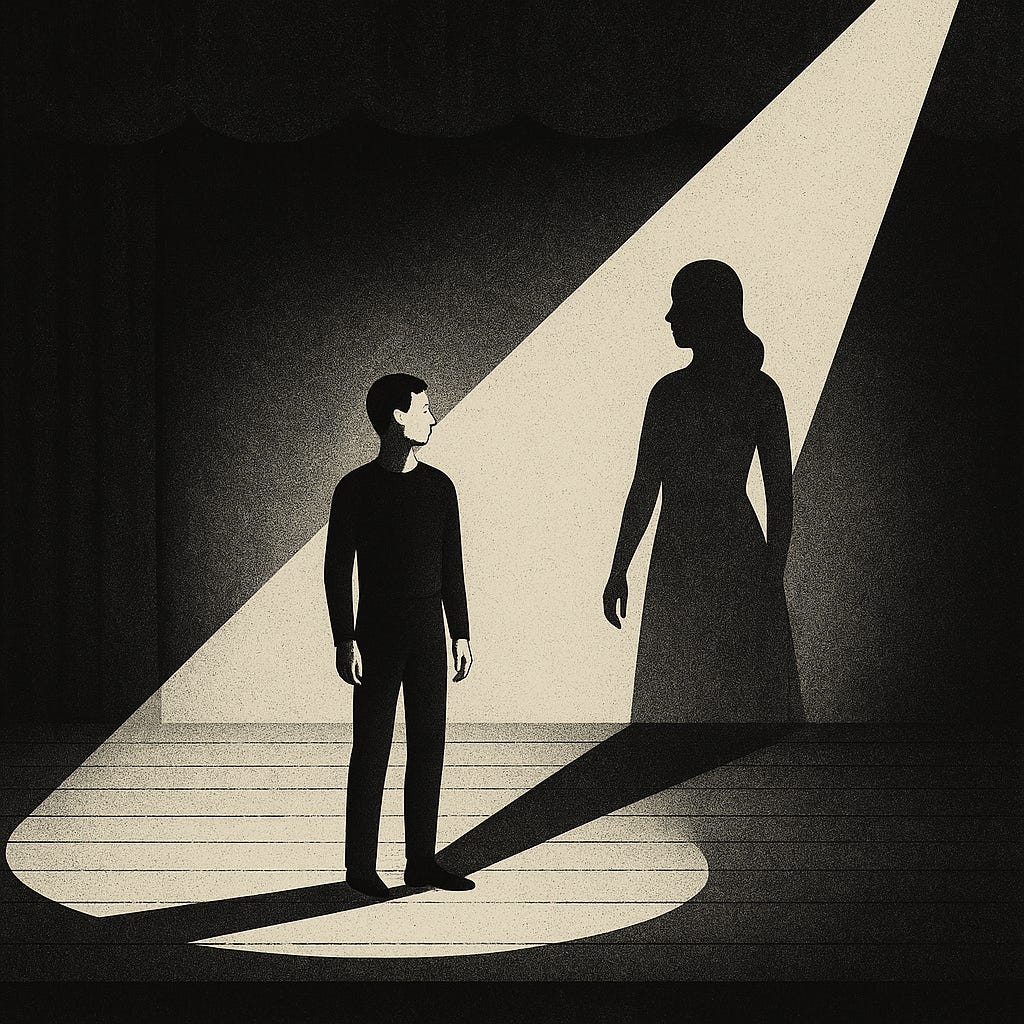
Today, Simone de Beauvoir is mostly taught through Judith Butler’s lens — the philosopher whose theory of “gender performativity” dominates feminist classrooms. Butler claims in early papers to have based her work on gender, sex, and the definition of woman on Beauvoir — and to have extended it. That means generations of students get a version of Beauvoir stripped of her materialism, her focus on the sexed body, and her clarity about what it means to live as a woman.
This isn’t an abstract academic dispute. It’s had immeasurable impact on two generations of young women who, ambushed by puberty and suffocated by gender norms, are invited to exit the category “girl” altogether — socially, hormonally, or surgically.
I’ve felt the cost — at conferences, in classrooms, with reviewers, and finally with the cancellation of my book on Beauvoir. But perhaps it’s in the everyday that its effect is most undermining.
The toilet that vanished
After a long editorial board meeting in London, with an hour to kill before my train, I ducked into my favourite museum café for tea. But first, hot and damp from five or six hot flashes an hour, I went in search of the cool refuge of its women’s toilets. For years, I’d been fond of these toilets: red floor tiles worn smooth by generations of women’s heels, a certain domestic hush.
They were gone.
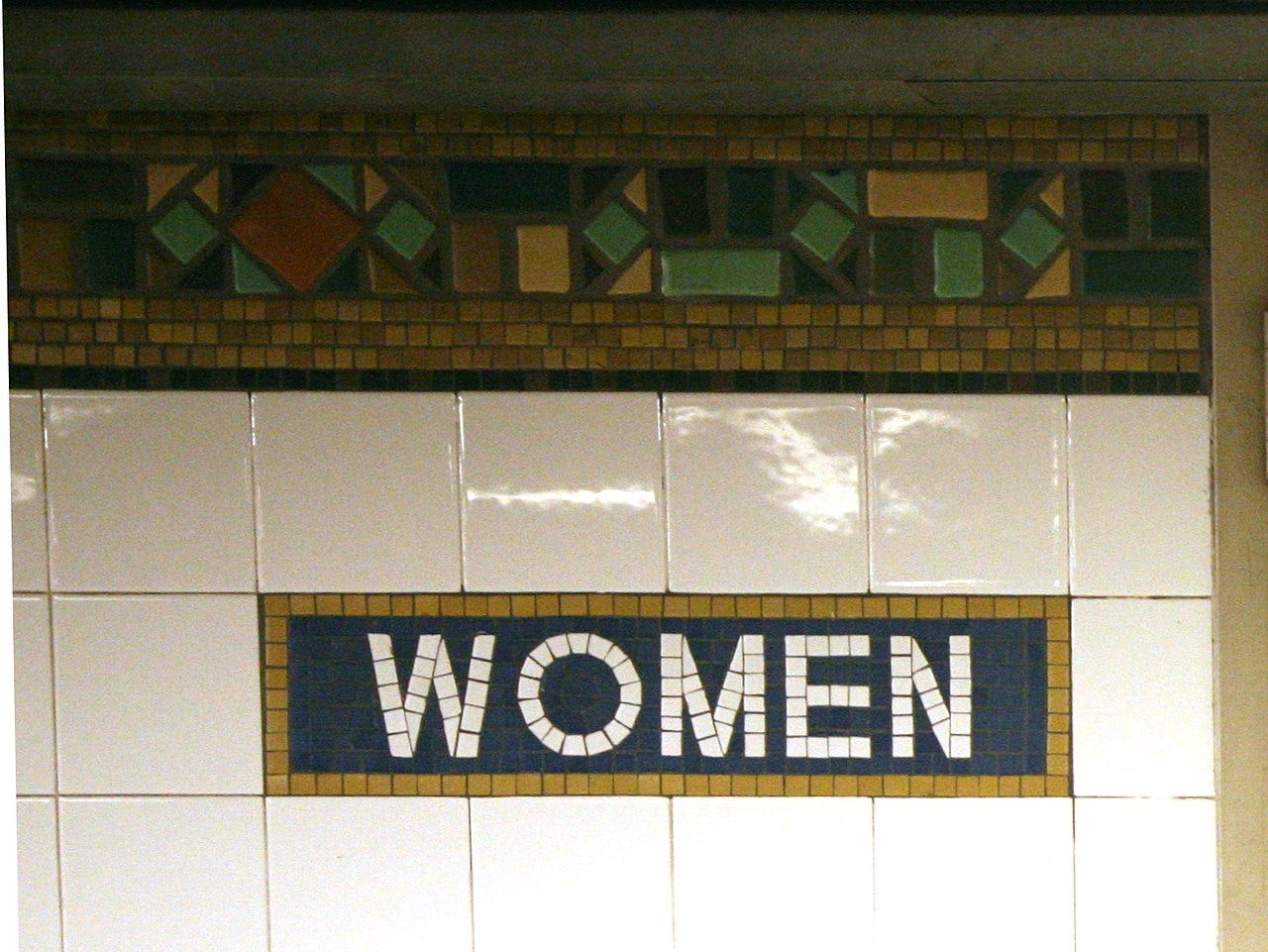
Image: City Hall (BMT Broadway Line) tile sign. Photo by sfflaw, CC BY-SA 2.0.
In their place: sleek white surfaces, cruelly bright lights, a gender-neutral sign. I tried two cubicles before finding one without pee on the seat. Emerging, I found myself face-to-face with a man. I washed my hands perfunctorily and ran out.
In the café — filled with laughing young women and men, or the Guardian-reading middle-aged — it was business as usual. But for me, everything had changed.
So that’s it, I thought. No more hanging out in a women’s space; young women will never get to know how that feels. The complicity. The whispers. The chance conversations as you paint your lips, the sympathetic glances in murky mirrors. The refuge from boys who mocked your body, from anxiety attacks, from the red stain at the back of your skirt — your best friend crouched beside you with a nail brush. For all of my youth, wherever I went, I knew the women’s toilets like travellers once knew sanctuaries along a dangerous road. And now, bit by bit, that map will be torn up.
But this isn’t just about toilets, despite women’s toilets being among the few spaces ever carved out for women’s privacy in public life. It isn’t even about safety.
This is the trap postmodern feminism has set: in erasing sex, it disarms the feminist project. We are left with no ground to stand on — and no shared name to rally under.
It is symbolic. Something has been displaced. Overnight, it felt, I had lost my place on the earth. A small, concrete part of being a woman had quietly been erased. And sitting in that café, it seemed I was the only one who thought it mattered.
Beauvoir after Butler
Beauvoir opened The Second Sex with a question that feels urgent now: What is a woman? Her answer was clear — a human being of the female sex, whose body is marked by culture but not erased by it.
Like many bright, ambitious girls, Beauvoir once refused the category “woman,” mistaking alignment with men for neutrality. Her great revelation — the one that produced The Second Sex — was that she had been a woman all along, even in refusal. Fortunately, she did not conclude that freedom meant becoming a man; she understood that her task — and ours — was to be free as women. That’s why she began not with identity or choice, but with biology.
Butler reads her differently. In her early work, she took the famous line — “One is not born, but rather becomes, a woman” — to mean that gender and sex were wholly constructed. In Butler’s post-structuralist account, gender is performance, and repeated performances produce the illusion of sex — a shadow cast backwards.
Here the two part ways. Where Butler sees gender as the foundational force — perhaps even the creator of sex — Beauvoir starts with the body.
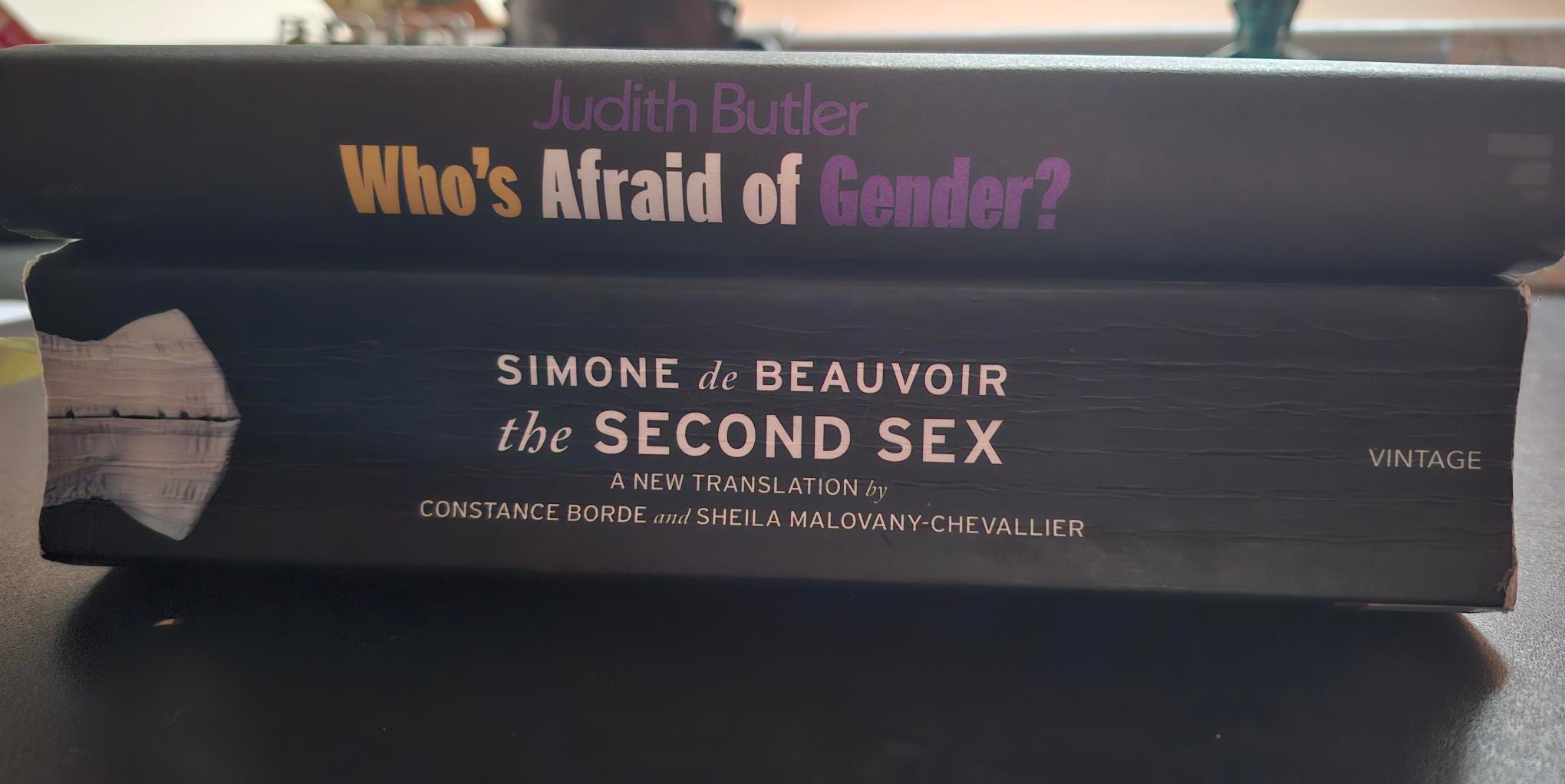
For Beauvoir, biology is not destiny — but it’s not nothing. Periods, pregnancy, menopause, ageing: the body shapes how gender is lived. She never severs sex from its material ground. Femininity, she writes, is often a cultivated weakness layered onto a body already marked by physical vulnerability — a body capable of pregnancy, menopause, injury, pain.
She doesn’t deny biology. She situates it — in history, in society, in relationship. This tension, between what biology gives and what society does with it, runs through her work. A woman’s body bears the brunt of reproduction — but how that burden lands depends on culture, politics, history. Woman is not a fixed reality but a becoming.
Which means: the lived experience of womanhood changes — across the life course, generations, contexts. The Second Sex isn’t about “woman” in the abstract. It’s about little girls, teenage girls, mothers, childless women, menopausal women, ageing women — all undergoing shifts in meaning, power, visibility. Bodies change; performances of gender change. What once fit now feels alien. Habits become clumsy. The old costume slips. They are still women.
As Laura Dodsworth asked in a much-shared Times article on detransitioning: feminism may have made life better for women — but is it any easier to inhabit a female body? A quick look suggests: absolutely not. Periods are debilitating for many women. Endometriosis is rising in both prevalence and severity. Abortion still requires two doctors’ approval in the UK, with justification on “mental health” grounds. Childbirth is increasingly risky: the 2022 Ockenden Report exposed crumbling maternity care; one in four women give birth alone and afraid. Maternal death is rising. Birth trauma is now a leading cause of PTSD in the UK. Menopause prompts one in ten women to leave the workplace. In deep old age, frailty is overwhelmingly female; women are twice as likely as men to develop Alzheimer’s disease. Add class and race, and the impact is worse.
Yet many now reach for frameworks that explain gender while leaving the body — its mess, its wildness — almost entirely out. And this abstraction has swept through culture like a millenarian craze.
Humans — and women — are animals. Not cartoons. Not cyborgs. To claim there’s nothing underneath the performance of femininity is to dissolve womanhood into the ether.
Fear in the classroom
Among the students I teach, Butler’s reading of Beauvoir has become orthodoxy. I’ve felt it in my own body — the thump of my pulse, the tightening in my chest — when their burning eyes fix on me.
When I teach that, for Beauvoir, a woman’s body is not a blank slate, not just a surface for self-expression, a student will raise her hand and say: “Whatever the biological cause, using ‘sex’ as a category is increasingly a rationalisation of prejudice.” Another will insist: “Sexual division is just an idea used by cis-women to erase the already marginalised existence of trans women.”
Though I speak neutrally, the fear of a complaint is always there. So when essays arrive as cool, complicated hagiographies to Judith Butler, I keep my feelings to myself. When they put scare quotes round the word “woman,” I let it go.
The consequences
I think of my younger self: playing with toy cars, hating my budding breasts, longing to be a boy. If I were a child now, would I have been given puberty blockers? Would I have disappeared?
The loss isn’t felt by children alone. It reverberates across feminism. If we can’t name sex, how can we name sex-based oppression? If sex dissolves into a haze of identities, how do we trace inequality?
We know men earn more. We know women do more unpaid labour. But if the data asks “male, female, or other,” how do we fight discrimination?
Feminism is being diluted into a vague form of social justice.
I think of the detransitioners: women who took testosterone, had mastectomies, even hysterectomies, only to realise their real struggle was with embodiment itself. Their stories rarely make it into the glowing lectures on gender fluidity.
This is not liberation. It is a refusal to imagine a free woman.
Choosing Beauvoir
Beauvoir insisted that women are both made and real — fictionalised by myth, yet rooted in biology, history, and practice. To dissolve womanhood into a vibe or a style is to disarm feminism entirely.
When the publishers cancelled my book, one of the major criticisms was my critique of Butler. I was told to rethink it completely. I refused. Which is why I’m publishing here instead.
I think back to that moment in the museum toilets. For years I imagined it was just me who felt the loss. It wasn’t. Others have told me the same — often the women who clean them. We are still here. And we can fight back.
We can reset the compass. We can choose Beauvoir: her vision of woman as both flesh and freedom, subject and agent, irreducibly real.
We are not done. And neither is she.
If this spoke to you, please consider passing it on — and subscribing to hear more.
Quote: 'Butler reads her differently. In her early work, she took the famous line — “One is not born, but rather becomes, a woman” — to mean that gender and sex were wholly constructed.'
Butler is apparently too obtuse to recognize metaphor when she sees it.
Honestly, my 12-year-old self would’ve been able to tell you Beauvoir was speaking in metaphor. Why are today’s academics so goddamn stupid??
This essay resonated with me so strongly, reading it felt like hearing my own thoughts spoken out loud. As a childless (by choice), 'CIS' woman, going through menopause, I feel increasingly out of step with a society that seems to value 'gender fluidity' above all else, and at whatever cost. Challenging, thought-provoking, and honest. Thank you.