
Good Boy
What They Should Teach Girls at School

This is the second essay in the series Living in the Valley
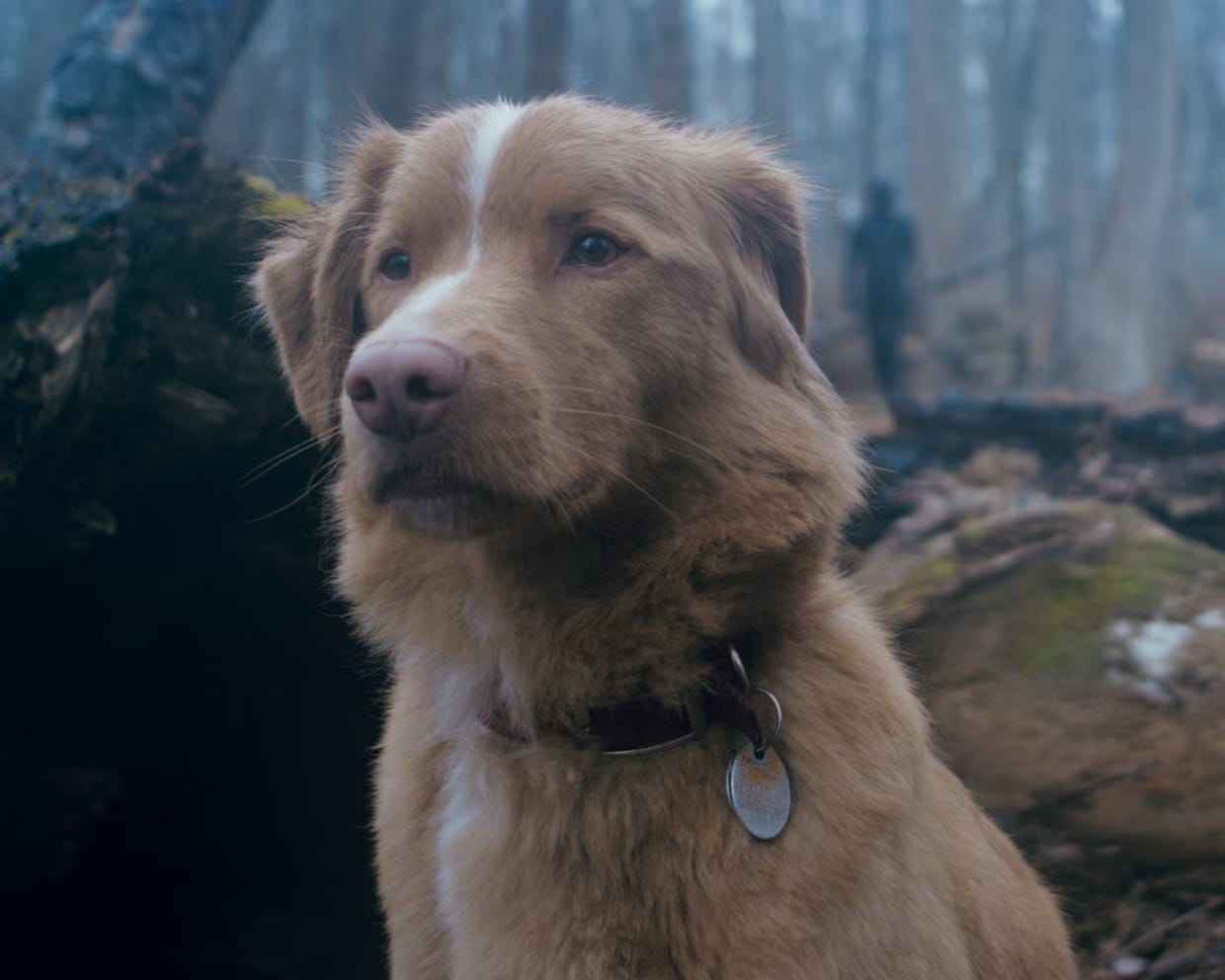
Indy, in Good Boy
“You’re a good dog. But you can’t save me.” These are the last words spoken in the movie Good Boy. They are meant literally. But they are also, in a deeper sense, wrong.
While the dog in the film cannot save the dying man from death, a dog once saved me: not from death, but from a kind of psychic stalemate.
It is one of the most original and poignant movies I have seen in a long time: original because it is seen from Indy, the dog’s eye view, poignant because the young man Todd, his owner, is dying from an unnamed illness, probably cancer. When the cancer returns, Todd retreats to his grandfather’s old house in the country with Indy. At first it is idyllic and we see Indy running joyfully in the fields that surround the house, but soon we see Todd going to chemo, coughing up blood and being told that it is too late for any more treatment.
Produced as a horror film, this works because, seen from Indy’s perspective, when the human you love and depend on is dying slowly, there can be no truer horror. The dark shadows in the corners, which may or may not be a demon, the scent of the previous dog, Bandit, who lived here with Todd’s grandfather, the feeling of menace swirling around even non-descript events and objects: all this constitutes an ominous atmosphere.
I am sure that just about every dog owner worries about what would happen to their buddy if they died. When I lived alone with my little dog Milo, I once planned meticulously that if the worst came – cancer, apocalypse – we would lie down together and take a pill. Still, we dog owners don’t talk about such things. How on earth could we?
Todd is right in one sense. A dog cannot save a dying man from death. But that line stayed with me because it made me think about something else entirely: the strange, almost unspoken ways dogs do save us.
Feminism was not taught at my school but the assurance that we would be entering a gender equal world was in the air I breathed, in the excitement of the girls planning their futures. I wanted to go through life as free as a man, but feminine with it. I believed I could do everything a man did without the need for changing myself. Years later, when I came to read Simone de Beauvoir, I realised she had been asking a question I had already been living without knowing it: how can a woman remain fully herself while loving another person? How can intimacy enlarge a life rather than consume it?
No one taught us this at school. No teacher pointed out that the emotional constituents of femininity remained in place, despite the political, legal and social changes of the late twentieth century. Carol Gilligan first described this pattern in the early 1980s, and writers such as Mary Pipher and Peggy Orenstein have continued to observe it in subsequent generations of girls. Carol Gilligan famously argued that Erik Erikson’s influential account of identity described a predominantly male developmental trajectory, in which a secure sense of self precedes intimacy. Many girls, she suggested, develop identity through relationships themselves, making selfhood and intimacy far harder to disentangle. Gilligan emphasises the positive aspect of this trajectory in what she called the “ethics of care”. But it left another question largely unexplored: what happens when care becomes self-erasure? It was this gap that later writers such as Pipher and Orenstein began to address.
Kate Bolick’s focus is on exactly this existential problem of losing oneself. In her wonderful article in The Atlantic that later turned into a memoir, Spinster, she reflects: “my relationships were my identity. My relationships took the place of myself.” Her account of how she began to address this should be required reading in schools, I think.
And certainly, what I hadn’t understood when I welcomed Milo into my life was that I, too, was addressing this very issue. For me, having a dog was not just companionship. It was a solution and one I had never managed to work out within my relationships with men.
For me, the problem was probably exacerbated by being an only child. I was used to intense inner privacy. I quickly discovered that intimacy – whether with friends or lovers – could tip into a kind of psychic colonisation that left me desperate for escape.
No matter how hard I tried, I could not find the balance between distance and engulfment. Waiting for an elusive lover to call gave the illusion of elastic space but made it hard to do anything but wait, set about deciphering messages, interpreting motives. With available lovers, I would find myself willing them to leave so I could breathe again; then feel either relief or panic when he did. When I realised I no longer had the stamina for this, I acquired a dog, stirred by a vague intuitive surmise after seeing a young woman at breakfast in a hotel with her dog. I thought I would be acquiring a companion that would help me become more self-sufficient, whilst keeping me from loneliness, a little pack of two. But I was wrong. What I got was so much more. Not just companionship but something that tilted my relationship with the whole world, until the seesaw between too much and not enough finally came to rest.
The first night I brought him home, Milo, a black and white papillon puppy, cried and whimpered. First, he was not happy in the basket I made for him in the kitchen. He threw himself against the door again and again, so I had to bring him upstairs to my bedroom, fearing he would injure himself otherwise. Then he needed to be not in a basket on the floor by the bed but on the bed near me for the whimpering to stop. The next morning, light-headed with lack of sleep, I seriously wondered if I’d made a big mistake. Within a week, as he settled in, I knew not only that I had not made a mistake but that it was probably one of the best things that had ever happened to me. Twenty years later I still feel this way.
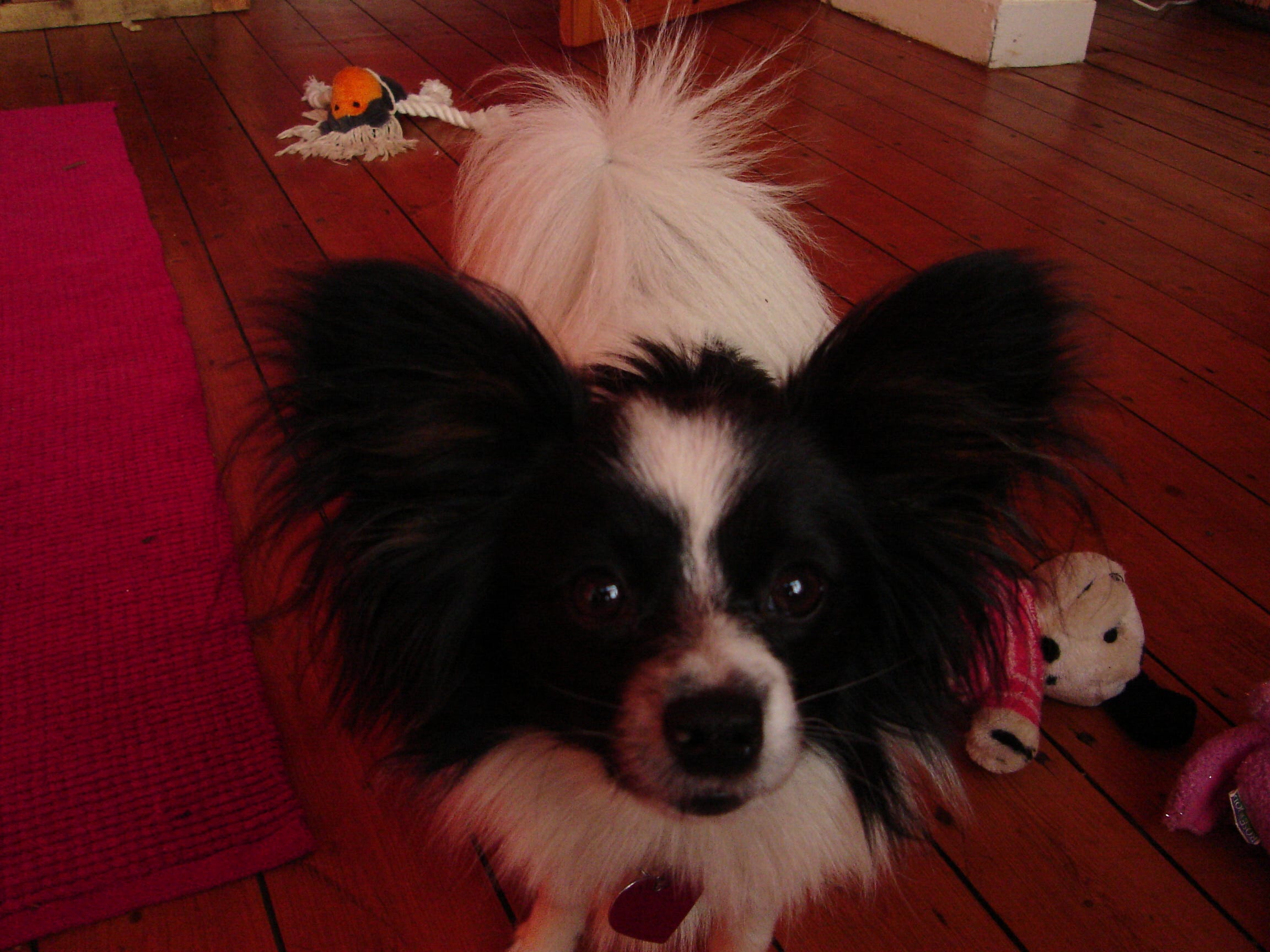
I later realised I was not the first woman to discover this. Caroline Knapp and Gail Caldwell have written beautifully about the profound ways dogs can reshape a life. More recently, Kate Spicer has explored similar terrain.
For the first time, I looked inwards for emotional sustenance, not outwards. In Good Boy, Todd and Indy’s tight unit is the focus during the initial uncertainty over Todd’s illness, the move to the countryside, the fears of it recurring: we see the world as a background buzz as they play games and interact. For me too: it was as if a little spotlight fell just on the two of us, a warm golden circle in which we both walked, as long as we were together. My chronic low-level depression considerably improved because I had a vulnerable little creature who gave me a reason to get out of bed in the morning, and where I had previously spent entire weekends languishing in bed, pinned down by lethargy, I now shot up early so that we could make it to the park and back before breakfast. Like Todd’s house, mine had always felt haunted. There is a presence that often accumulates in old houses, the weight of the past stacked up, and in the past I’d been scared to be there alone at times. In Good Boy, the past is alive too – as Todd and Indy’s last days together mirror those of his grandfather and Bandit – and the camera lingers on doorways, hallways and corners at Indy’s eye level, so that the house feels less like a setting than a field of watchfulness. And, like Indy, Milo sensed the dark shadows and chased them back; I was never again frightened there. His insistence on sitting beneath my desk and resting his chin on my feet as I worked meant that the hours slipped by and I wrote up the research notes that had been gathering dust on my shelf for months, while the presence of a warm little body right beside me on the covers, the popcorny scent of warm fur and paw pads, his shoulders gently rising and falling, soothed me to sleep each night.
This was a love that left me free. A presence that made the house a home but did not impinge on my psychic space in the way that had been so troubling with love affairs or intense human friendships. For me, the devotion of another without colonisation of my soul was a breakthrough in its totality.
Again and again the camera returns to Indy’s nose in lavish close-up, as if scent, not sight, were the film’s real narrative engine. Watching it reminded me of the beauty of Milo’s own nose: his face culminating in that quivering cone of feeling, the delicate nostrils, one ringed with white like a birthmark, cool to the touch as a February crocus, sucking in the world like air into a trombone. I did my best thinking on our walks together. After work his joy at our reunion helped me switch off from my worries, and when I shut the door behind me it was as if we were sealed off from the rest of the world in our own small haven.
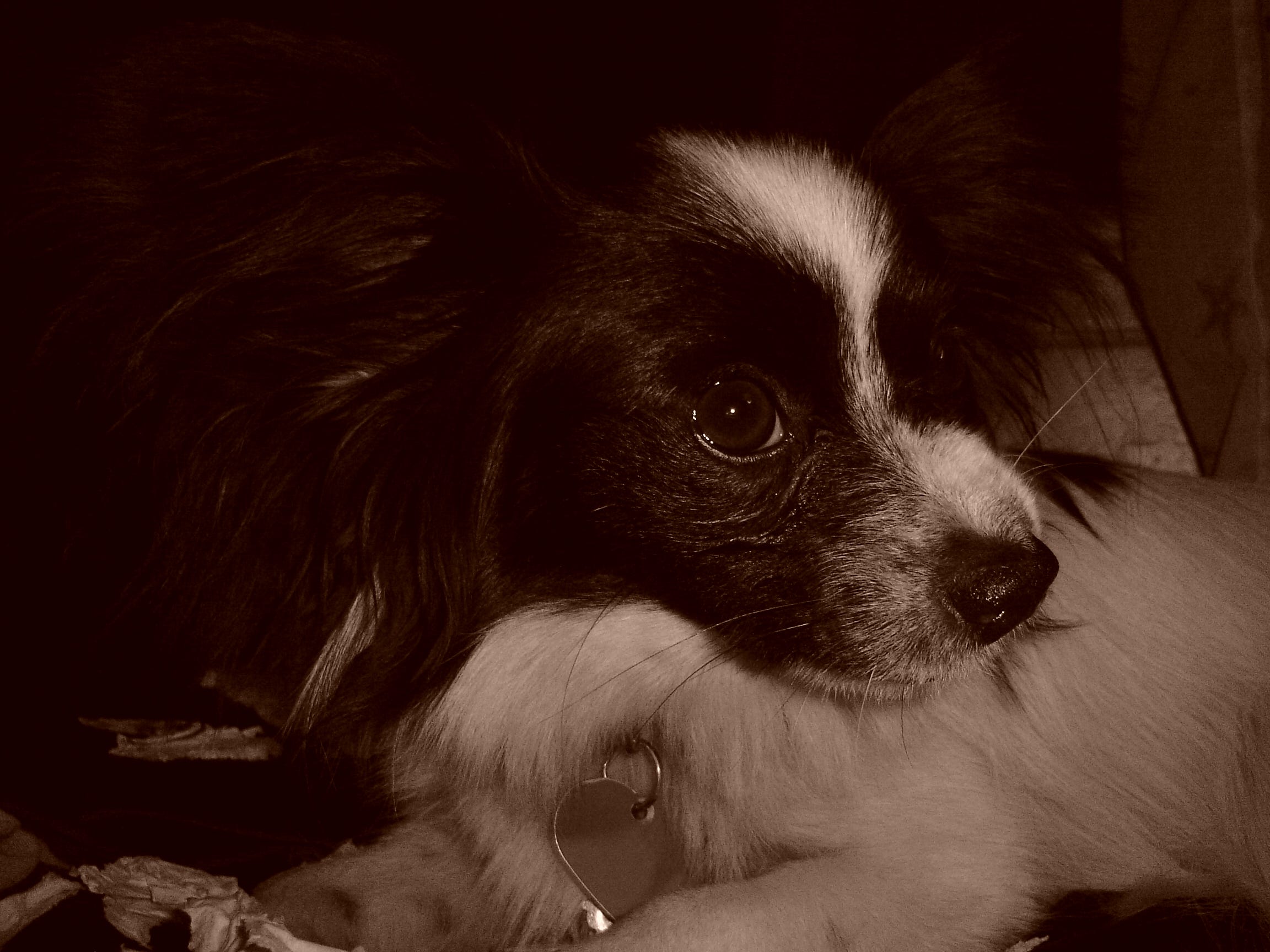
And then I met my husband. Exactly when I wasn’t looking, of course. When I was emotionally self-contained, content in my tiny family. So of course it had to be now. Having Milo did not mean that I had cracked the problem of balancing autonomy and intimacy in human relationships. But it helped. Where once I had thought it an impossible state, I now knew phenomenologically and from the inside how this felt, and as the understanding was almost tacit or pre-conscious, it was one I knew how to replicate, recalibrating accordingly when the balance slipped one way or another.
When R stayed with me, I would escape the thrilling intensity of the early days by taking Milo out alone for a walk. I remember the crazy bobbing of the first bluebells in the park that spring, and Milo chasing, and always missing, the squirrels with intense purpose and delight. If we argued, another solo walk with Milo helped clear my head. R lived in another country at this time, so the rhythms of my life with Milo grounded me against the jarring of our times together and apart, soothing both the loneliness at R’s leaving and thinning the intoxicating air that swirled around us when he arrived. Walking Milo, feeding him, bathing him – like Indy in Good Boy, he loved to splash in puddles and roll and jump in the mud – grounded me in daily rhythms that meant I could not lose myself. Establishing my relationship with R in practice meant that he was drawn into a circle of three. Milo was not an intruder in our intimacy but its quiet guarantor, ensuring that neither of us disappeared into the other.
I wrote about Dean Potter’s life-changing bond with his little dog, Whisper, in the previous post in this series, and I see huge resonances here. Perhaps Whisper taught Dean how not to feel constrained and trapped in intimacy, but instead to feel tethered to ordinary life in a gentle, welcoming way. Potter certainly spoke at the end of his short life about wishing that he had learnt earlier that there was more to life than climbing mountains and transcending limits. And Dean left Whisper behind, in her own horror film. Like Indy, Whisper could not prevent his death, in the end, although she introduced him to life in its fullest and richest sense.
Simone de Beauvoir spent much of her life thinking about how women could remain free without becoming isolated, and how they could love without disappearing inside someone else’s life. I had never found the answer in my human relationships. Strangely enough, I first discovered it through a dog.
I discovered unexpectedly how a dog solves the riddle of emotional geometry.
The dog creates a third relational form; not romantic fusion, not solitary independence but something like attached autonomy.
And it is the model for my human relationship too, the one that eventually turned into marriage.
At the end of Good Boy, the dying Todd says: “You’re a good dog. But you can’t save me.”
In one sense he is right, of course. Dogs cannot save us from death.
But they may save us for life.
Thank you Susan, I think you write beautifully. Every time I read you I am moved and intellectually stimulated by your thoughtful, self reflective and informed approach.
excellent piece! Thank you.
And Beauvoir's question rolls on. Still in need of attention.
In my early 70s, I am finding another level of being my self / by myself. Now maybe I can be in relation without losing myself. And I am so grateful for granddaughters who remind me what being close feels like.